
Policy Today
Solar Austin was initially formed in 2002 to bring solar companies, solar advocates, and members of the Austin community together to advocate for a rooftop solar incentive program at Austin Energy. That successful campaign launched Solar Austin, creating an organization to develop programs and policies discussed with the local utility and council members so they could reflect the needs of the people. Policy advocacy continues to be an important element of our work to ensure the sustainable and equitable deployment of solar energy.
Current and upcoming local solar policy
Austin Energy Solar Standard Offer
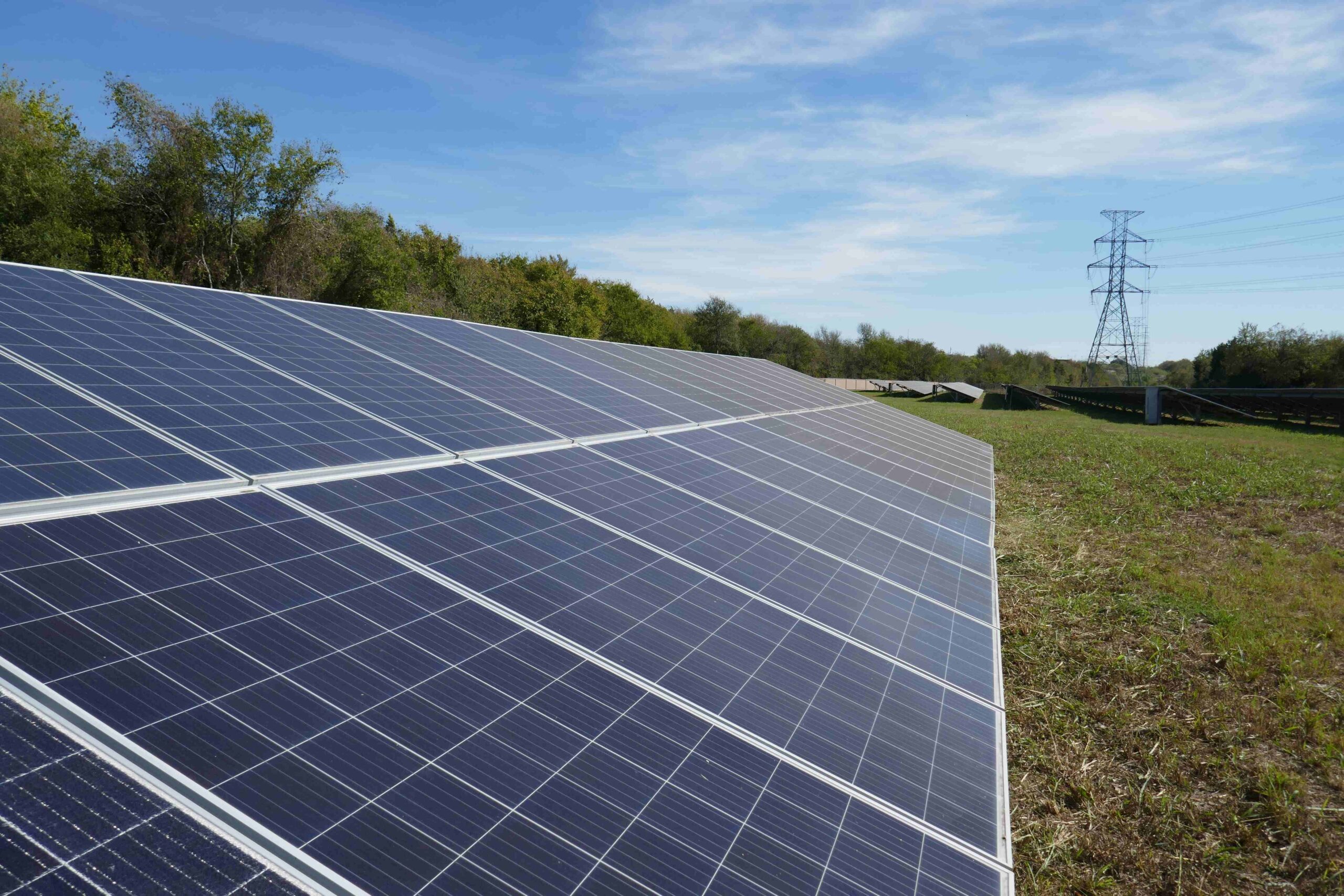
Austin Energy launched a new Solar Standard Offer program allowing property owners to host solar energy systems on their properties without investing. Solar companies can pay property owners for the use of their roof space and then sell the energy produced directly to Austin Energy at a set rate.
Solar Standard Offer installations will add capacity to Austin Energy’s Community Solar program. Initially, the Solar Standard Offer is open to medium and large commercial buildings that can host a solar system of at least 50 kilowatts.
Starting in December 2024, Austin Energy will host additional stakeholder meetings to work on expansion of the program to small commercial and residential properties. These meetings will be open to the public. Email us at info@solaraustin.org to get involved.
Download the Commercial Solar Standard Offer Program Flyer_2025
Solar For All
In August 2024, Austin Energy was awarded $31.5 million from the U.S. Environmental Protection Agency to bring free solar to low-income customers, disadvantaged communities and community centers. Austin Energy will soon launch a series of stakeholder meetings to get input from the community on the details of this new program. Learn more about the program here.
Austin Energy Community Solar
Austin Energy’s Community Solar program is subscription-based directly with Austin Energy, so no investment is needed. Solar Austin hosted a community workshop and conducted a survey that aided in development of the program. As a result of community advocacy, half of the program capacity was allocated to low-income customers at a discounted rate.
The program is currently available only to residential customers and is fully subscribed. Austin Energy will issue another Community Solar offering as solar capacity is built through the Solar Standard Offer. The utility may change the structure of Community Solar program subscriptions, so stay tuned for opportunities to weigh in on any changes. You can join the Community Solar waiting list on Austin Energy’s website. Signing up doesn’t commit you to participating in the program, but it does signal Austin Energy that there is demand for local solar energy among customers.
Austin Energy - the value of solar rate
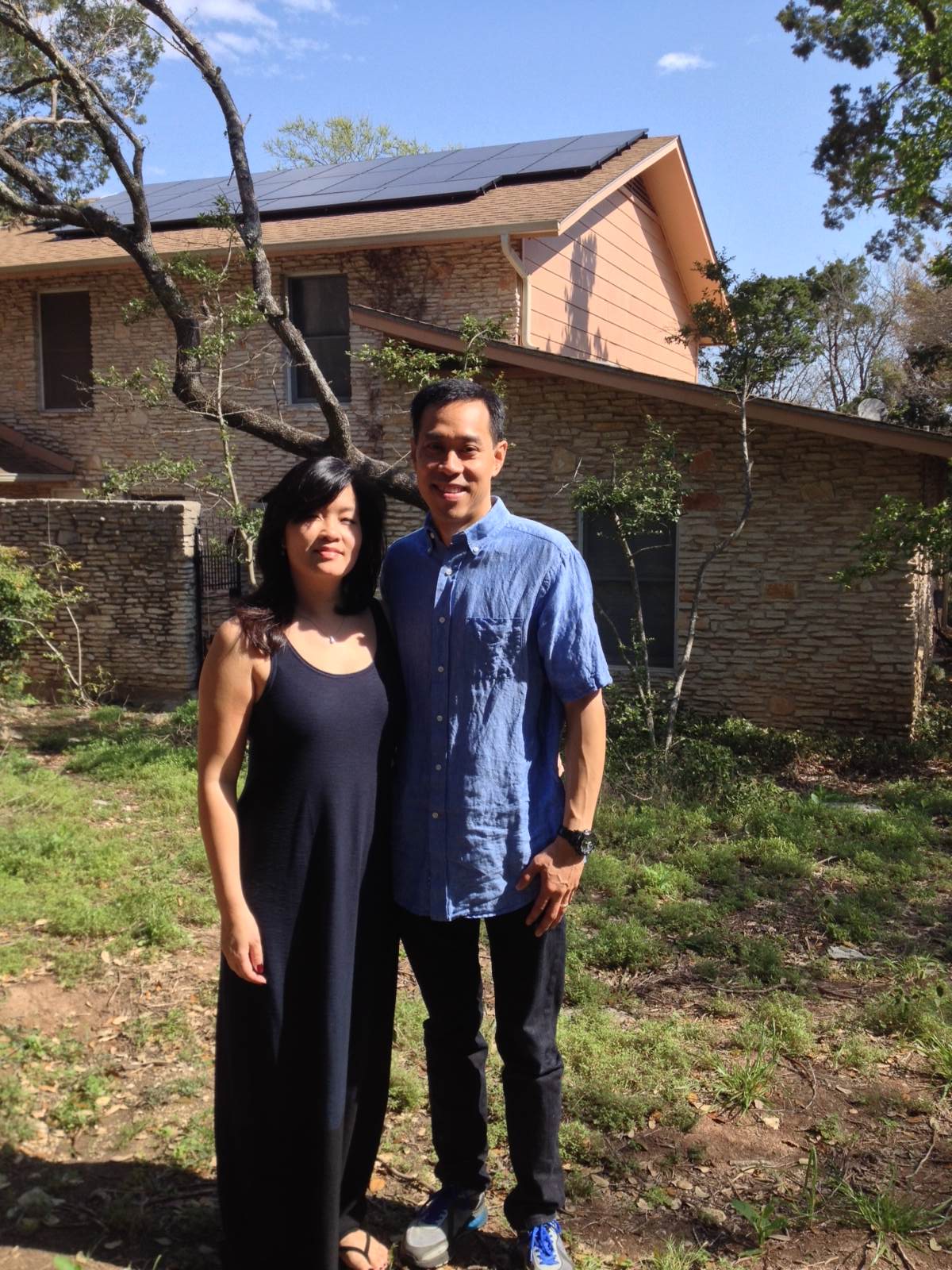
In 2006 Austin Energy pioneered the concept of calculating the financial value of all the benefits provided by customer-sited (i.e. rooftop) solar when it hired Clean Power Research to conduct an analysis. In 2012, Austin Energy established a Value of Solar (VOS) rate for residential customers. The VOS replaced net metering and established that customers pay for all energy they use – even from their solar installations – and are compensated at the VOS rate for all energy they produce from solar – even the energy they use on-site.
This decoupling of the value of on-site solar energy production from customers’ consumption does two important things:
1) It preserves the energy conservation signal from Austin Energy’s tiered rates.
2) Makes solar more equitable by valuing every kilowatt-hour (kWh) on-site solar produces the same.
In contrast, with net metering, customers who use more energy (generally more wealthy customers with large homes) would get more value from their solar installations because they could use solar to mask their high energy use and avoid paying the higher tiered rates.
The methodology for calculating the VOS has been changed a couple of times. Community advocacy and involvement in Austin Energy rate cases have been key to ensuring a fair and customer-friendly rate. For example, Solar Austin successfully advocated for VOS bill credits to continually roll over instead of expiring at the end of the calendar year. We also successfully advocated that the rate be set based on a multi-year rolling average of the annual values to insulate customers from significant market swings.
Solar Austin worked with Austin Energy staff on developing the Commercial VOS, which was implemented in 2017. In 2022, Austin Energy eliminated the distinction between residential and commercial installations for the VOS and set two rates based on installed solar capacity at the property.
- VOS for installations of less than 1 megawatt (MW): $0.0991/kWh
- VOS for installations between 1 MW and just under 10 MW: $0.0724/kWh
The VOS rate is updated every three years and will change in March 2026.
More incentives
Several incentives are available that make solar more affordable in Austin.

| INCENTIVE | DESCRIPTION | TYPE | OCCURRENCE |
|---|---|---|---|
| Federal solar tax credit | Nonrefundable tax credit worth 30% of installation cost (until 2033) | Tax credit | One-time |
| Property tax exemption | No increased property taxes from installing solar panels (must file from with county appraisal office) | Tax exemption | Ongoing |
| Energy Residential Solar Rebates | $2,500 for residential solar installations of at least 3kW | Check | One-time |
| Austin Energy Performance-Based Solar Incentives | Incentive for commercial and nonprofit solar installations is credited to the bill over five years for each kilowatt-hour produced | Bill credit | Ongoing |
Community advocacy wins
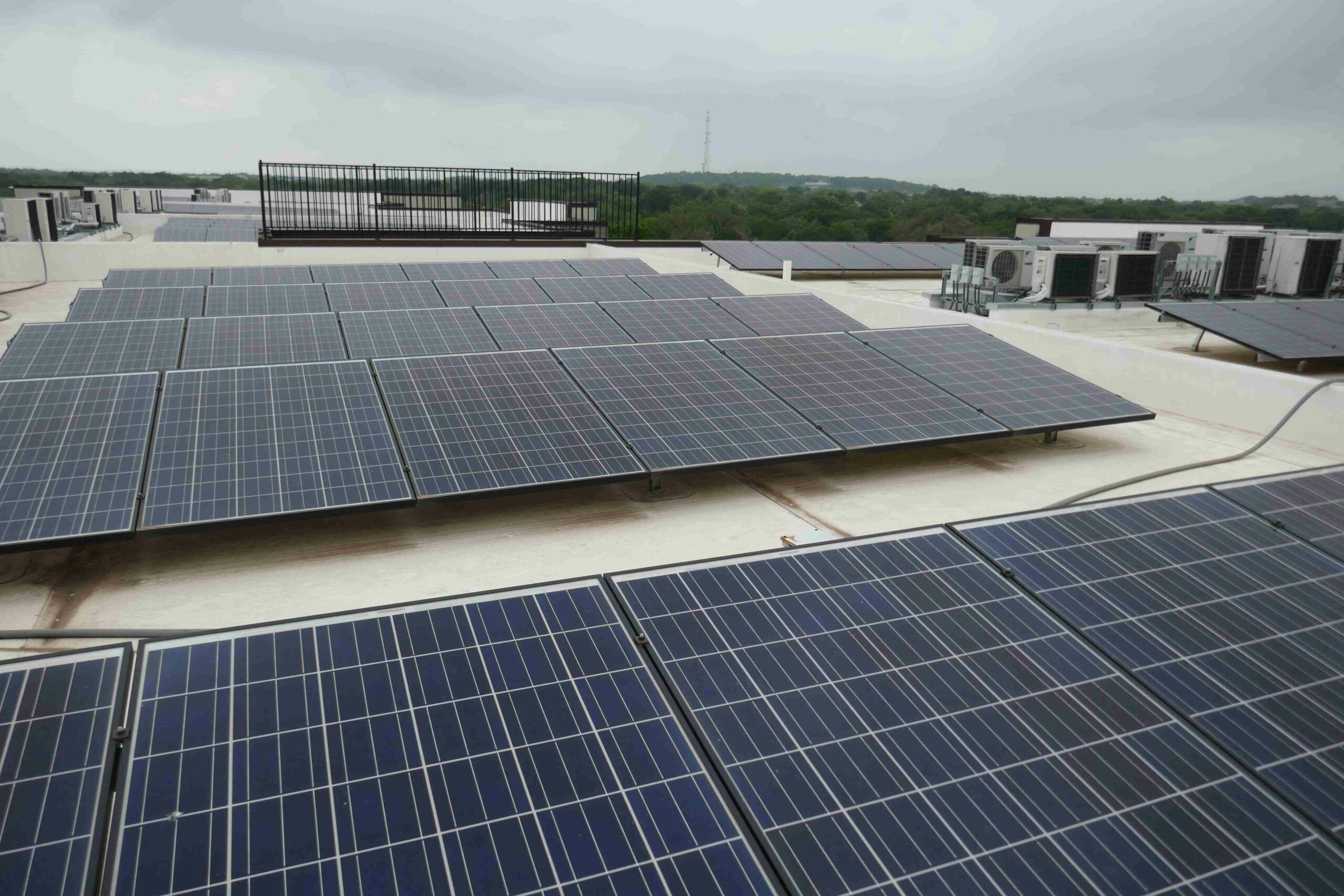
- Shared Solar for Multifamily Properties: Shared Solar is a billing mechanism that allows value of solar bill credits from a single solar installation to be divided among multiple residential units in a multifamily property.
- Nonprofit solar incentive.
- Maintaining a fair value of solar (VOS) tariff.
- Establishing and increasing local solar capacity goals.
- Restructuring the commercial performance-based solar incentive to pay out over five years instead of ten, so customers receive the same amount of money, but quicker.
- Preserving solar incentives and budgets.